

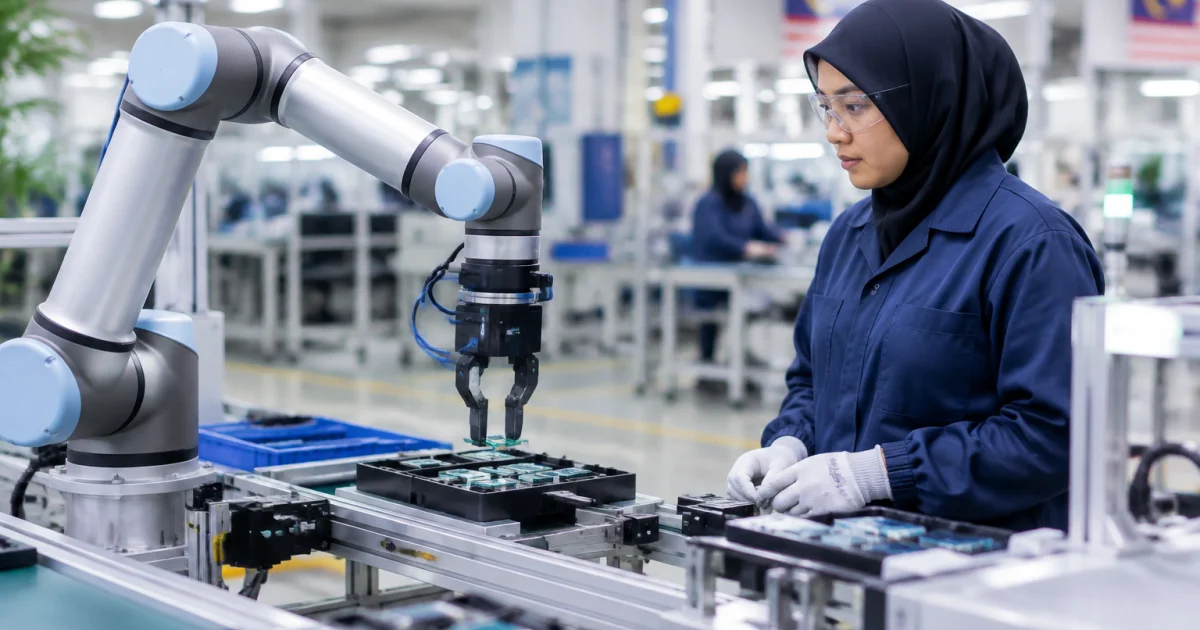
Collaborative robots are often shortlisted because they promise faster deployment and less disruption than traditional automation. In practice, results depend less on the arm and more on integration choices: part presentation, quality verification, operator interaction, and downtime recovery. If you are evaluating a techman robot (TM cobot) for pick-and-place, assembly, or machine tending in Malaysia, the most valuable work happens before you sign the quotation.
This guide outlines what to verify when selecting a TM cobot integrator: technical fit, cell design, safety and compliance, programming and changeovers, vision and inspection, and after-sales support. It is written for SMEs, manufacturing engineers, and operations leaders who want a practical checklist.
Start with the application, not the arm
A TM cobot is only one part of a production system. The same model can succeed or fail depending on the process around it. Before comparing payload and reach, define the task in manufacturing terms:
- Part variation: tolerances, surface reflectivity, flexible parts, mixed SKUs, and change frequency.
- Required output: cycle time/takt targets, buffers, and whether production runs continuously or in batches.
- Quality requirements: pass/fail definition, current defect detection method, and inspection expectations.
- Human interaction: loading/unloading, replenishment, job confirmation, and rework.
- Upstream/downstream interfaces: conveyors, feeders, fixtures, machine doors, barcode/QR scanning, or MES triggers.
A capable integrator should convert this into a concept of operations: layout, sequence, error handling, and changeover plan. This is also where “cobot vs industrial robot” becomes a real engineering decision. If you need high speed, long reach, heavy payloads, harsh environments, or extensive guarding, an industrial robot cell may fit better. A strong partner will say so early.
What a TM cobot integrator actually delivers (beyond installation)
Integration is typically a combined mechanical, electrical, controls, and process engineering effort. When comparing integrators in Malaysia, prioritise the ability to deliver a complete, testable system—not just supply hardware.
Cell design and mechanical engineering
This covers fixtures, stands, and guarding where required, plus workholding that enables repeatability. In electronics and precision work, fixtures often determine achievable cycle time more than robot speed. Ask how parts will be presented (trays, pallets, feeders) and whether the integrator will prototype grippers/nests early to validate repeatability.
End-effectors, grippers, and force control
Gripper and tooling decisions commonly drive delays. Your integrator should recommend appropriate grippers (vacuum, electric, custom) and specify sensors as needed (part presence, vacuum pressure, force/torque). For press-fit, polishing, grinding, or delicate assembly, confirm how force is controlled and how wear items and calibration will be maintained.
Controls integration and handshaking
A reliable cell must communicate with machines, conveyors, feeders, safety devices, and vision systems. Ask what PLC/control approach is used, how interlocks are designed, and how faults/alarms will be shown to operators. The integrator should explain handshaking logic clearly and show how the cell will recover safely from jams, mispicks, or missing parts.
Programming, job recipes, and changeovers
For SMEs with frequent product changes, clarify how operators select recipes, how new SKUs are added, and what training is included. Good integrators design for maintainability: clear job naming, documented points, useful error messages, and a predictable restart procedure after stops. Avoid a cell that only the integrator can modify.
Vision, inspection, and traceability: decide early
Projects often stall when inspection is treated as an optional add-on. If you rely on manual checks today, decide early whether you need a robotic vision inspection system to improve consistency, reduce rework, or support traceability.
Common vision and inspection needs include:
- Part location: finding parts in trays, bins, or on conveyors.
- Orientation checks: polarity, pin direction, label alignment, or seating confirmation.
- Defect detection: missing components, incorrect assembly, cosmetic issues, or contamination.
- Code reading: barcode/QR verification for lot tracking and process confirmation.
When evaluating in-cell inspection or “vision inspection machines,” ask the integrator to define camera placement, field of view, lighting, and pass/fail logic. Also confirm what happens when results are uncertain: reject to a bin, request operator confirmation, or stop the line.
In electronics environments, vision may connect naturally to robotic soldering systems or post-solder inspection. Even if soldering is not in scope now, your integrator should consider how future stations (dispensing, screwdriving, AI inspection) could connect to the same process flow.
Safety and risk assessment: cobots still need engineering discipline
“Collaborative” does not mean “no safety work.” You still need a risk assessment, appropriate safety functions, and a clear operating concept. Strong integrators build safety into the design from the start.
Validate these points with your integrator:
- Collaboration mode: continuous shared workspace vs occasional entry for loading/changeover.
- Speed and separation: limits, sensing approach, and defined behaviour when a person approaches.
- Tool hazards: sharp parts, hot processes, rotating tools, and pinch points that may still require guarding.
- E-stops and reset logic: placement, restart procedure, and lockout considerations.
Request a safety concept drawing early (layout, access points, sensors, and zones). For machine tending, confirm how machine doors and interlocks are managed so both robot and machine remain safe during faults.
Commercial and operational checks before you appoint an integrator
At commercial investigation stage, compare proposals on clarity and risk reduction—not only price. These checks help make quotes comparable.
1) Proof of fit and realistic ROI assumptions
A credible proposal states assumptions: part presentation method, scrap rate, cycle time range, staffing model, and operating hours. Be cautious of promised throughput without constraints. Ask for a validation plan that defines what will be proven at design reviews, factory acceptance testing (FAT), and site acceptance testing (SAT).
2) Scope boundaries and what is “included”
Misunderstood scope is a common failure point. Confirm who supplies and commissions: fixtures, grippers, sensors, vision, electrical panel, PLC, safety devices, conveyors, air preparation, and network/MES interfaces. Also confirm what your factory must provide (anchors, power, air, Ethernet, space, operator time).
3) Documentation and training deliverables
Ask for deliverables that let your team own the cell: electrical drawings, I/O list, pneumatic schematics (if used), operating manuals, preventive maintenance checklist, spare parts list, and training for operators and maintenance.
4) After-sales support and local response
Downtime costs more than most teams expect. Clarify remote diagnostics, on-site response expectations in Malaysia, what is covered under warranty, and how program changes are handled. Good documentation (alarm guide and restart steps) speeds recovery after faults.
5) Roadmap: scaling from one cell to a plant strategy
Many SMEs start with a pilot. A strong integrator can propose how to replicate the solution across stations, manage recipes across lines, and later integrate material movement (for example, an AMR machine for internal logistics). Robotic automation Malaysia is most effective when planned as a system that can scale.
Why manufacturers shortlist Chin Tech for TM cobot integration
If you are comparing integration partners, Chin Tech positions its work around end-to-end delivery: concept, design, integration, programming, testing, and commissioning under one accountable team.
- End-to-end system integration: cobots, sensors, machine vision, grippers, controls, and production equipment combined into a complete cell.
- Experience in automation engineering: 21+ years of automation experience and 800+ systems deployed across manufacturing environments (project-supplied facts).
- Quality management: ISO 9001:2015 certified processes supporting consistent execution.
- Local support: based in Penang, supporting customers across Malaysia with on-site integration and long-term optimisation.
Where suitable, Chin Tech can also support adjacent needs often linked to TM cobot projects: machine vision & inspection, robotic soldering systems, automated production equipment (such as auto-screwing or auto-dosing), and warehouse/material handling automation.
For reference while specifying payload and reach, you can review TM cobot options such as Techman Robot TM12 or Techman Robot TM5-900. You may also find it useful to explore Chin Tech’s TM collaborative robot range and broader collaborative robot solutions.
Conclusion: choose the integrator that reduces implementation risk
Selecting a TM cobot is a decision about how you will run production, not only which robot to buy. The strongest TM cobot integrators in Malaysia will ask detailed questions about parts, cycle time, changeovers, and quality, then translate requirements into fixtures, tooling, safety design, controls integration, and a maintainable program structure.
Before committing, insist on written clarity: assumptions, scope boundaries, acceptance tests, documentation, training, and after-sales support. With these defined, you can compare vendors fairly and start with fewer surprises.
If you would like additional background on choosing an integration approach, you can also read How Automation System Integrators In Malaysia Improve Manufacturing Efficiency.
Frequently Asked Questions
What should I ask a TM cobot integrator before buying a Techman Robot?
Ask for a clear application breakdown (cycle time, part variation, and changeover frequency), a proposed cell layout, tooling/gripper concept, safety concept, and a test plan (FAT/SAT). Also confirm what is included in scope (fixtures, vision, sensors, PLC, safety devices), what your factory must provide (power, air, network, floor space), and what training and documentation you will receive.
Is a cobot always better than an industrial robot for pick-and-place or machine tending?
Not always. Cobots are often chosen for flexible deployment and closer human interaction, but industrial robots may be better for higher speed, longer reach, heavier payloads, or harsher environments. A good integrator will evaluate the process first and recommend the most suitable approach rather than forcing a cobot into a task that needs a different robot cell design.
Do TM cobot projects in Malaysia need machine vision and inspection?
They should be considered early, especially if you need consistent quality checks, orientation verification, barcode/QR traceability, or automated defect detection. Vision requirements affect camera placement, lighting, and cycle time, so adding it late can cause redesign. An integrator should define what happens on ambiguous results (reject, stop, or request operator confirmation).
What does “system integration” include for a cobot automation system?
System integration typically covers cell and fixture design, end-effector selection, sensors and I/O, safety design, controls/PLC and handshaking with upstream/downstream machines, robot programming, recipe/changeover strategy, commissioning, and acceptance testing. It also includes documentation and training so your operators and maintenance team can run and troubleshoot the cell.
How do I compare after-sales support between cobot integrators?
Compare response process (remote diagnosis vs on-site), spare parts recommendations, how program changes are handled, and whether the integrator has local engineering support in Malaysia. Also clarify what support is included during warranty and what documentation you will have to enable faster recovery after faults (alarm guides, restart steps, and maintenance checklists).
Plan Your TM Cobot Cell With Chin Tech
If you’re evaluating a Techman Robot for pick-and-place, assembly, or machine tending, Chin Tech can help you translate your process requirements into a complete, supportable automation cell. As an end-to-end automation integrator with 21+ years of experience and 800+ systems deployed, our team supports Malaysian manufacturers with cobot integration, machine vision & inspection, robotic soldering systems, AMR solutions, and custom automation equipment—backed by ISO 9001:2015 processes and local technical support from Penang.
Share your part details, cycle time target, and line constraints, and we’ll advise on cell concept, safety approach, tooling, inspection options, and a practical deployment plan.

