
Automation decisions in Malaysia have shifted from “Should we automate?” to “Which architecture scales, stays safe, and delivers ROI under real factory constraints?” In 2026, the momentum is less about adding robots and more about integrating cobots in flexible workcells, AMRs for material movement, machine vision for in-line quality, and AI inspection for harder-to-define defects.
This guide summarizes the key trends and turns them into selection and rollout guidance for manufacturing leaders and engineers—especially in electronics, semiconductor, precision engineering, general manufacturing, and warehouse/logistics operations.
Trend 1: Cobots move from “easy tasks” to engineered workcells
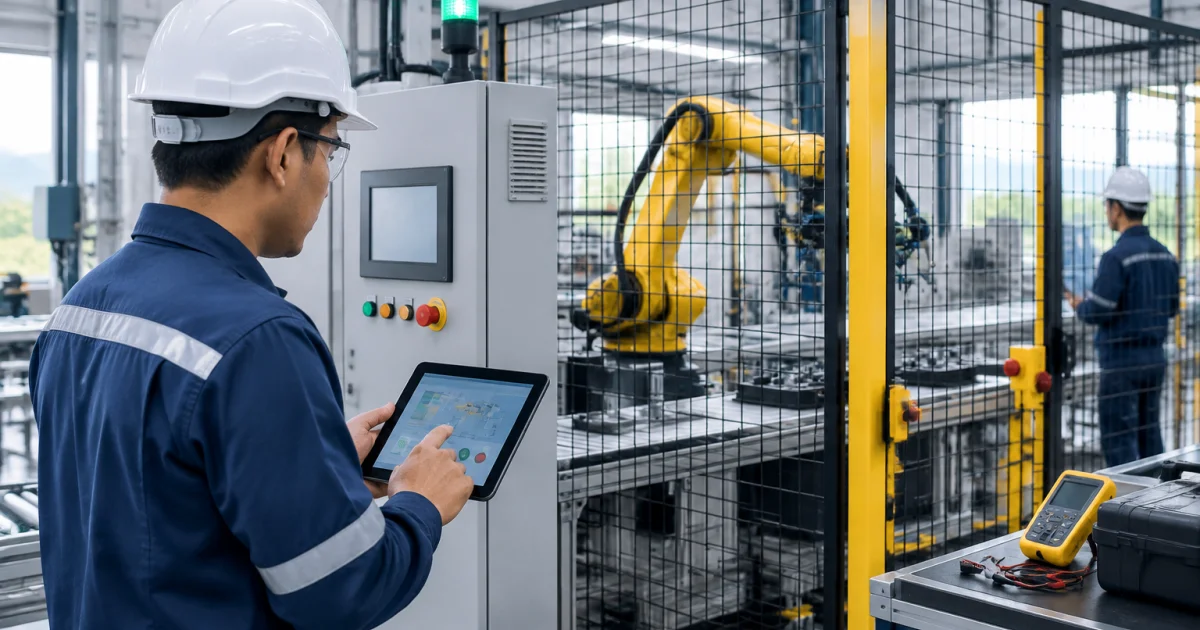
Cobots gained traction due to simpler guarding options, faster changeovers, and easier redeployment than fixed industrial robot lines. In 2026, leading deployments treat cobots as part of engineered workcells—fixturing, sensing, and process control—so they can deliver higher-value outcomes without sacrificing flexibility.
Where cobots are expanding in Malaysian factories
- Machine tending with smarter interfaces: Interlocks, door actuators, and PLC handshakes reduce “operator babysitting.”
- Precision finishing with force control: Force/torque sensing improves polishing/deburring consistency and reduces scrap.
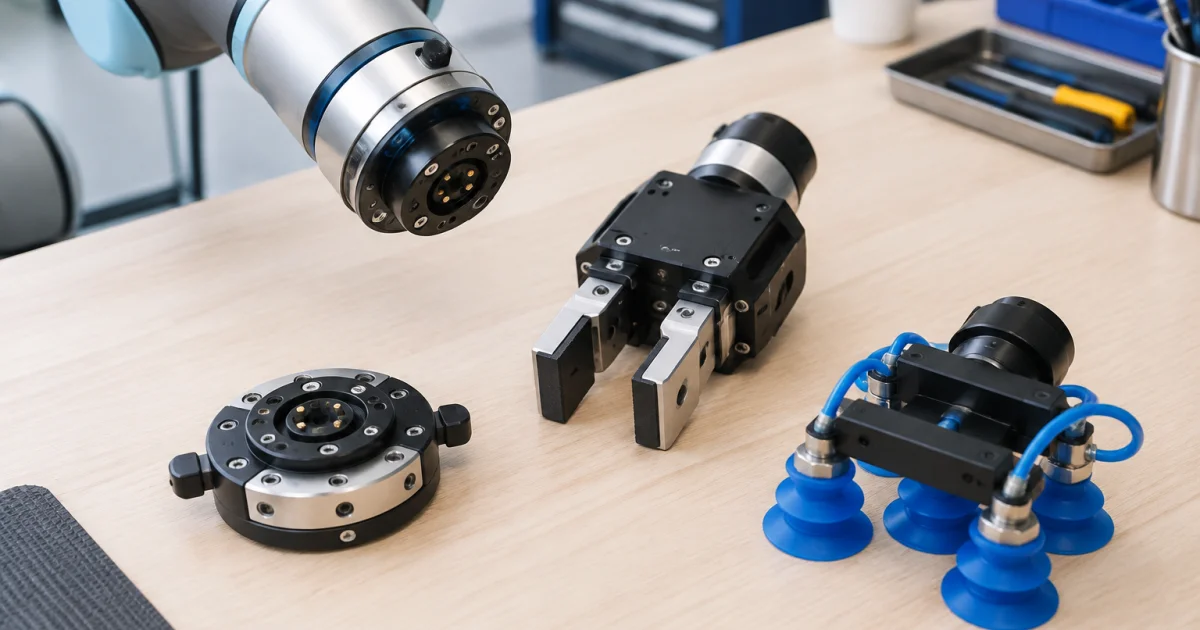
- Assembly and handling with modular end-effectors: Quick changers and standardized grippers support multi-SKU work.
- Electronics processes that demand repeatability: Robotic soldering is evaluated alongside cobots for feeding, unloading, and inspection steps.
Key implication: once cycle time, quality, and safety validation are included, most cobot projects are not “plug-and-play.” The strongest results come from system design—robot + tooling + sensors + fixtures + software—rather than an arm-only purchase.
Trend 2: AMRs become the default for internal logistics—when the workflow is ready
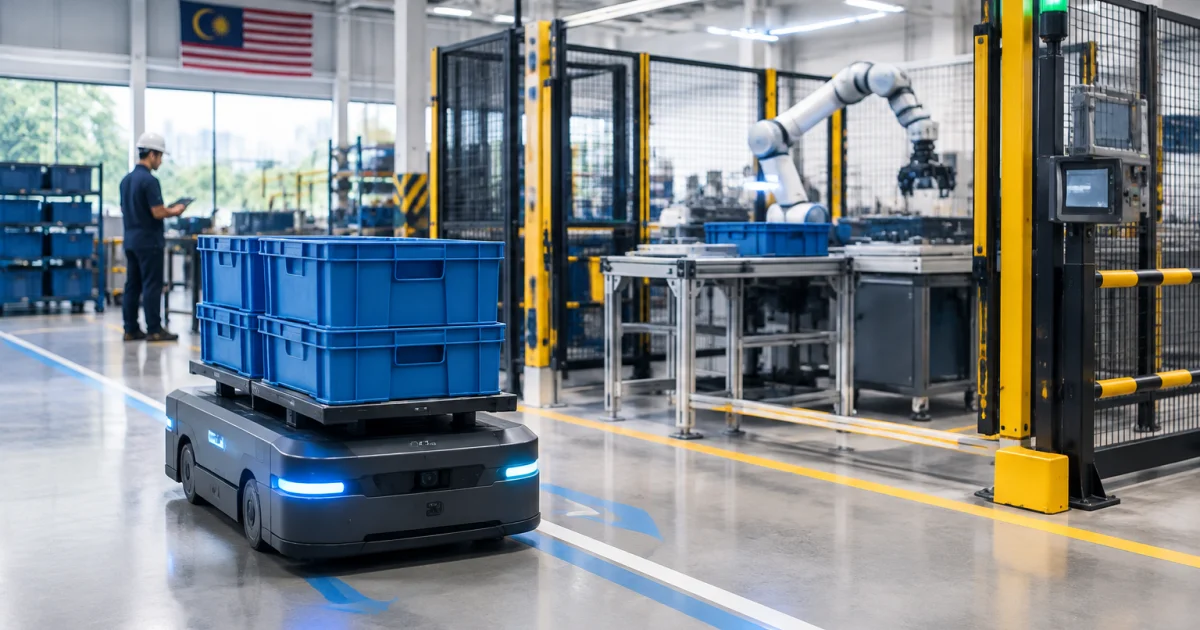
Many Malaysian plants have upgraded equipment but still rely on manual trolley movement and ad-hoc material calls. AMRs are increasingly used to reduce waiting time between steps and stabilize flow, especially with high mix and evolving layouts. It’s common to see buyers searching for an “amr machine” as internal logistics automation becomes accessible beyond large greenfield sites.
What’s changing in AMR adoption
- From point-to-point to fleet workflows: Projects now define pickup/drop rules, priority queues, and traffic management.
- More emphasis on interfaces: The challenge is often handoff to racks, conveyors, lifts, or robot cells—not navigation.
- Safety by design: Stronger focus on risk assessment, pedestrian interaction, aisle management, and sensor selection (including LiDAR).
Practical takeaway: AMRs deliver the best ROI when unit loads (totes/trays/pallets) and handoff points are standardized and aisles stay predictable. Without those basics, an AMR can become a moving bottleneck.
Trend 3: Machine vision shifts from “spot checks” to in-line decision-making
Machine vision is moving closer to the process. Instead of images for later review, systems increasingly trigger real-time actions: reject, rework, stop-the-line, or adjust upstream settings. This is why teams look for a robotic vision inspection system and vision inspection machines that can meet cycle time and handle variation.
Where vision is providing the biggest gains
- Traceability and identification: Reliable barcode/QR reading under difficult lighting and surfaces.
- Presence/absence and orientation checks: Detect missing components, incorrect seating/polarity, and assembly errors early.
- Cosmetic and surface inspection: Find scratches, dents, printing defects, or contamination despite reflections and material variation.
Engineering focus is shifting toward optics, lighting, fixturing, and variation control. Often the best “vision upgrade” is stabilizing part presentation so software isn’t fighting physics.
Trend 4: AI inspection grows—but it’s being deployed more carefully
AI inspection helps recognize complex defect patterns that rule-based vision struggles with. In 2026, adoption is more disciplined: teams treat models as production assets requiring dataset governance, version control, monitoring, and clear escalation paths for unknown defects.
What mature AI inspection projects do differently
- Define defect taxonomy early: Align on “pass,” “rework,” and “fail,” and assign ownership for decisions.
- Plan for drift: Supplier changes, finishes, or process shifts require retraining and re-validation loops.
- Use AI where it’s strongest: AI fits complex visual variation; classic vision excels at measurement, alignment, and deterministic checks.
A practical starting point for many manufacturers is hybrid inspection: traditional vision for measurement/verification plus AI-based anomaly detection for subtle defects. This reduces risk while delivering value quickly.
Trend 5: Application-led automation—soldering, palletizing, and “integration-first” buying
Buying behavior is shifting from “Which robot brand?” to “Which application outcome?” That’s why terms like soldering machine, auto soldering, and palletizing system malaysia are common: buyers want a working cell that meets takt time, yield, and safety—not a collection of components.
Robotic soldering: consistency, traceability, and repeatability
Electronics manufacturers use robotic soldering to reduce joint-quality variation and stabilize output when skilled labor is constrained. Successful cells typically include more than motion control:
- Tip temperature control and process parameter recipes
- Fume extraction planning
- Fixture design to prevent board movement
- Optional vision alignment/verification
If you’re evaluating an auto soldering machine, align early on flux, solder type, joint specification, and takt time so the cell is engineered to real process needs. For product examples, review Chin Tech’s options such as the Chin Tech Ex399 Robotic Soldering Machine.
Palletizing and end-of-line: faster deployment through standard patterns
Palletizing remains attractive because it’s repetitive, physically demanding, and often a peak-demand constraint. More plants are standardizing pallet patterns, slip sheets, and pallet quality so a palletizing robot (or hybrid conveyor/stretch-wrap system) runs reliably. The common limits are inconsistent pallets, unstable cartons, or unclear upstream handoff logic—not the robot itself.
Integration-first procurement: why “system integrator” matters more
As stacks connect (robot + AMR + vision + sensors + PLC/MES touchpoints), more teams start with an integration plan rather than a single device specification. This is especially relevant for buyers searching robotic arm integration malaysia who need local engineering support for commissioning, risk assessment, and long-term optimization.
Practical roadmap: how to turn 2026 trends into deployable projects
Trends matter only when they translate into engineering and purchasing actions. Use this sequence to move from pilot to scalable deployment for robotic automation Malaysia initiatives.
1) Choose the right first process (and define success clearly)
Select a process with stable inputs and measurable outputs. Strong starters include machine tending, simple pick-and-place, standardized inspection points, or repetitive end-of-line handling. Define success using cycle time, defect escape rate, OEE impact, ergonomic risk reduction, and changeover requirements.
2) Engineer variability out before automating it
If parts arrive in mixed orientation, packaging varies, or fixtures are inconsistent, automation will appear unreliable. Standardize trays, add poka-yoke features, improve part presentation, and document work instructions—often the highest-ROI “pre-automation” work.
3) Design for safety and maintainability, not just demos
Cobots and AMRs may reduce guarding, but safety remains a system property. Plan risk assessments, safe stop logic, operator boundaries, and maintenance access. A safe cell that’s hard to maintain will lose productivity over time.
4) Treat data and traceability as part of the system
In-line vision, AI inspection, and robotic soldering generate valuable process data. Decide what to store (images, defect codes, parameters), retention periods, and who uses it (QA, process engineering, production). Even simple dashboards can speed troubleshooting and reduce repeat defects.
5) Scale with modular building blocks
Once the first cell works, replicate with standard modules: common electrical designs, reusable PLC blocks, standardized grippers, and proven camera/lighting setups. This helps scale without turning every line into a custom one-off.
Conclusion: what to prioritize next
In 2026, automation in Malaysia is increasingly connected and application-led. Cobots are moving into engineered workcells, AMRs are reshaping internal logistics, and machine vision—often paired with AI inspection—is enabling real-time quality decisions. The best outcomes come from building maintainable systems that fit product mix and constraints.
Next steps: prioritize (1) a high-impact process with stable inputs, (2) robust fixtures and part presentation, and (3) integration that treats robots, vision, safety, and data as one system—so pilots become scalable production improvements.
Useful next reads
- Chin Tech Robotic Soldering product category for comparing options and typical use cases
- Chin Tech Ex 393 Robotic Soldering Machine for an additional soldering platform example
- Chin Tech Ex799 400 Robotic Soldering Machine for higher-capacity application consideration
Frequently Asked Questions
How do I choose between a cobot and a traditional industrial robot for my line?
Start with payload, reach, takt time, and required accuracy, then evaluate safety and layout constraints. Cobots are often chosen for flexible, mixed-SKU stations and faster redeployment, while traditional industrial robots typically fit higher-speed, higher-payload, fully guarded cells. In practice, the best choice depends on the complete workcell design—fixtures, tooling, safety concept, and interfaces—not the arm alone.
What factory conditions make AMRs successful in production (not just in a pilot)?
AMRs perform best when unit loads are standardized (totes, racks, pallets), pickup/drop points are clearly defined, aisles are kept predictable, and there is a clear interface to conveyors, lifts, or workstations. Also plan traffic rules, charging strategy, and safety zones early. If material presentation is inconsistent, AMRs can spend more time waiting than transporting.
What is a robotic vision inspection system used for in manufacturing?
It combines cameras, lighting, optics, and software (often integrated with robots or conveyors) to automatically check parts for defects or assembly correctness. Common uses include barcode/QR reading, presence/absence checks, orientation verification, measurement, and cosmetic inspection. The most reliable systems are engineered with stable part fixturing and controlled lighting to reduce variation.
Is AI inspection replacing traditional machine vision?
Not completely. Traditional vision remains excellent for deterministic tasks like measurement, alignment, and rule-based checks. AI inspection is most useful when defect appearance varies or is difficult to describe with rules (for example, subtle cosmetic variation). Many factories adopt a hybrid approach: classic vision for measurements and AI for anomaly detection, with clear processes for retraining and validation.
When does it make sense to invest in an auto soldering machine?
It makes sense when solder quality consistency, repeatability, and throughput are constrained by manual variation or labor availability, especially in electronics assembly. Before buying, define the solder joint requirements, cycle time, flux and solder type, board fixturing needs, and any vision alignment or traceability requirements. A successful deployment is usually a full process cell—tooling, fume handling, parameters, and validation—not just the soldering unit.
Plan your next automation cell with Chin Tech
If you’re evaluating cobots, AMRs, machine vision, AI inspection, or robotic soldering for a Malaysia site, Chin Tech can help you move from concept to a production-ready system. As an end-to-end automation integrator with 21+ years of experience, ISO 9001:2015 processes, and 800+ systems deployed, we design and integrate complete solutions—robot, tooling, sensors, vision, controls, commissioning, and local support—based on your cycle time, space, and quality targets.