
In high-mix manufacturing, the robot arm is rarely the constraint—your end-effector is. One cell may handle trays, pouches, PCBs, machined parts, and labelled cartons in the same shift. When the gripper can’t tolerate variation in geometry, surface, or presentation, the failures look like “robot problems” but usually trace back to tooling, sensing, or unclear process definition.
This guide explains how to choose a collaborative robot gripper for high-mix production by comparing electric grippers, vacuum grippers, and custom end-effectors. The goal is not a universal “best” gripper, but a gripping strategy that supports fast changeovers, stable quality, and repeatable cycle time.
Start with the high-mix reality: define the job, not the gripper
High-mix projects often stall when teams pick a gripper model first and then force parts and fixtures to fit. Instead, define the production problem in measurable constraints:
- Part family map: group SKUs by geometry and surface (porous/non-porous, fragile/rigid, oily/dry, flexible/rigid packaging).
- Pick method: top vs side pick; single vs multi-pick; from bin, tray, conveyor, or fixture.
- Orientation tolerance: allowable misalignment before you need compliance, self-centering, or vision guidance.
- Quality risks: scratches, dents, ESD, contamination, deformation, residue transfer.
- Changeover target: include mechanical swap, program/recipe swap, and verification.
- Environment: dust, oil mist, temperature, washdown, and vacuum supply availability.
With these defined, “electric vs vacuum vs custom” becomes a defensible trade-off.
Electric grippers: controllable force and repeatability for varied parts
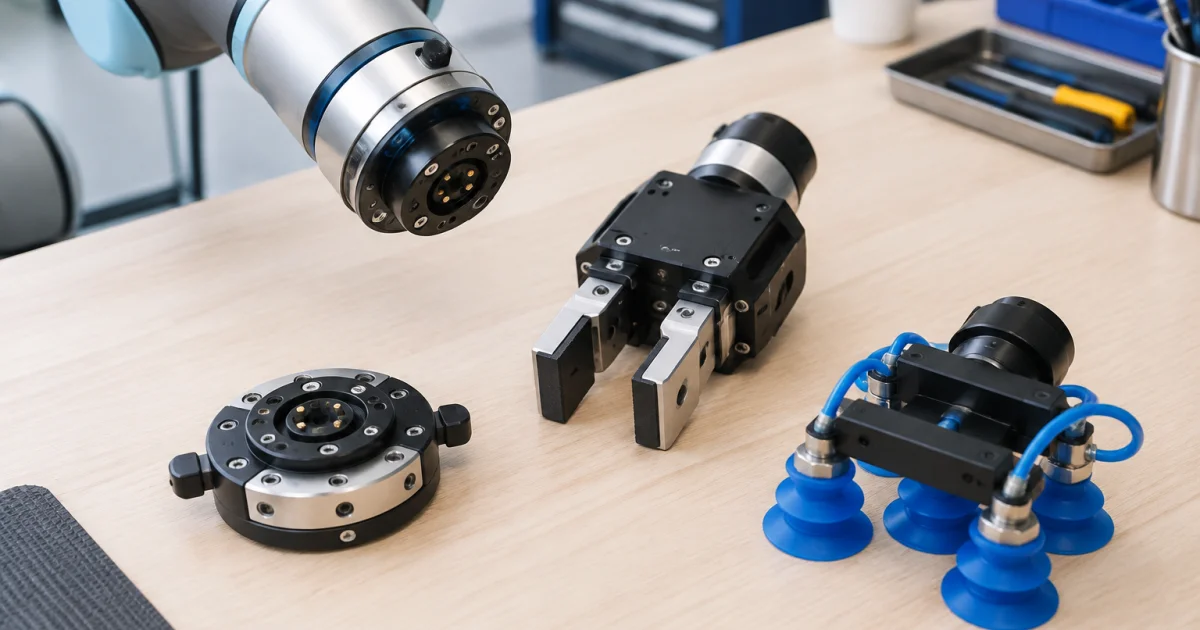
Electric parallel or angular grippers are common on cobots because they’re clean, controllable, and easy to parameterise. In high-mix, their main advantage is repeatable force and position control, letting you run different part families via recipes without rebuilding the whole tool.
Where electric grippers shine in high-mix
- Rigid, predictable parts: machined components, housings, connectors, many assemblies.
- Force-limited gripping: protecting plastics, thin walls, and cosmetic surfaces.
- Useful feedback: grip position/force for basic part-present or mis-pick detection.
- Low infrastructure: avoids vacuum generators and reduces pneumatics if you prefer an all-electric cell.
Common pitfalls (and mitigations)
- Jaw design dominates performance: plan interchangeable fingers, pads, or a jaw kit per part family.
- Variation can exceed finger tolerance: add compliance (floating mount) or guidance (vision) instead of increasing force.
- Tray density causes collisions: use slimmer fingers, angled approaches, or switch to vacuum for tight top picks.
If SKU changes are frequent, a quick changer or modular finger system can reduce downtime—provided seating is repeatable and you have a short verification routine.
Vacuum grippers: fast, forgiving picks—when the surface cooperates
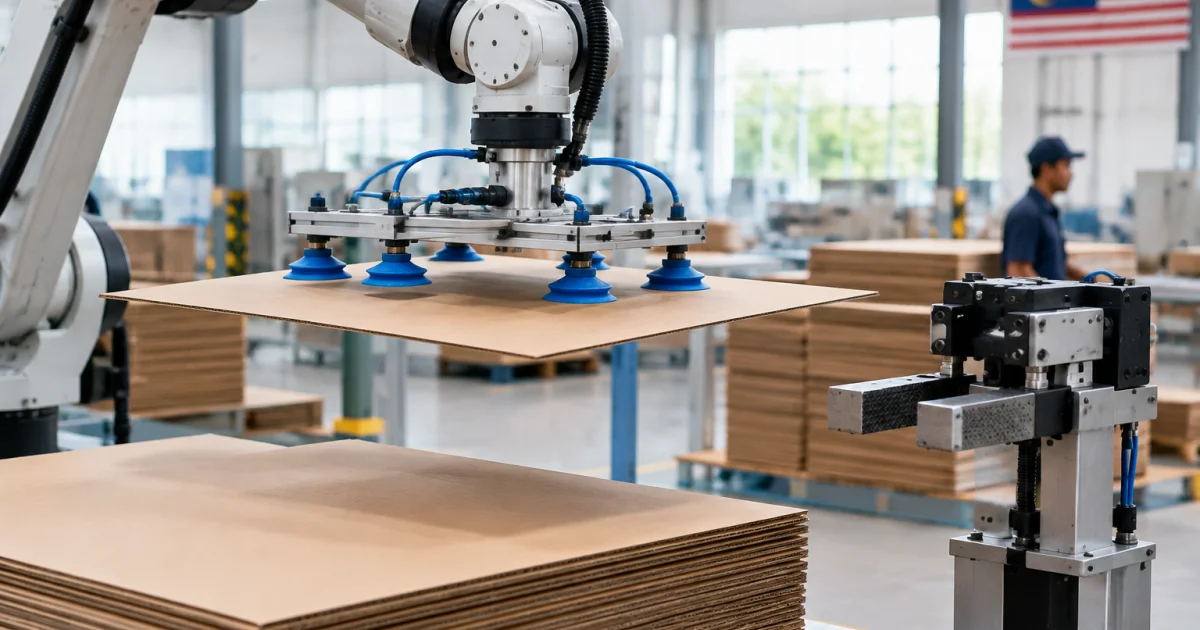
A vacuum gripper robot approach is popular for packaging, kitting, and pick-and-place because vacuum is forgiving in XY and can be very fast. In high-mix, a single cup or foam pad may cover multiple sizes with fewer mechanical swaps.
Best-fit applications for vacuum in high-mix
- Flat, non-porous surfaces: sealed pouches, blister packs, smooth cartons, plastic lids, many trays.
- High throughput picking: quick attach/detach with simple motion profiles.
- Limited side access: top picks from tight trays where fingers can’t enter.
- Gentle handling: spreading contact pressure (e.g., foam pads) to reduce marks.
What breaks vacuum performance in real factories
- Porous/textured materials: paper, unsealed cardboard, rough castings can leak.
- Oily, wet, or dusty surfaces: oil can cause slip; dust clogs filters and reduces vacuum level.
- Small contact area: ribs, narrow edges, vents reduce seal quality.
- Unstable supply: long hoses, shared lines, or undersized generators create inconsistent picks.
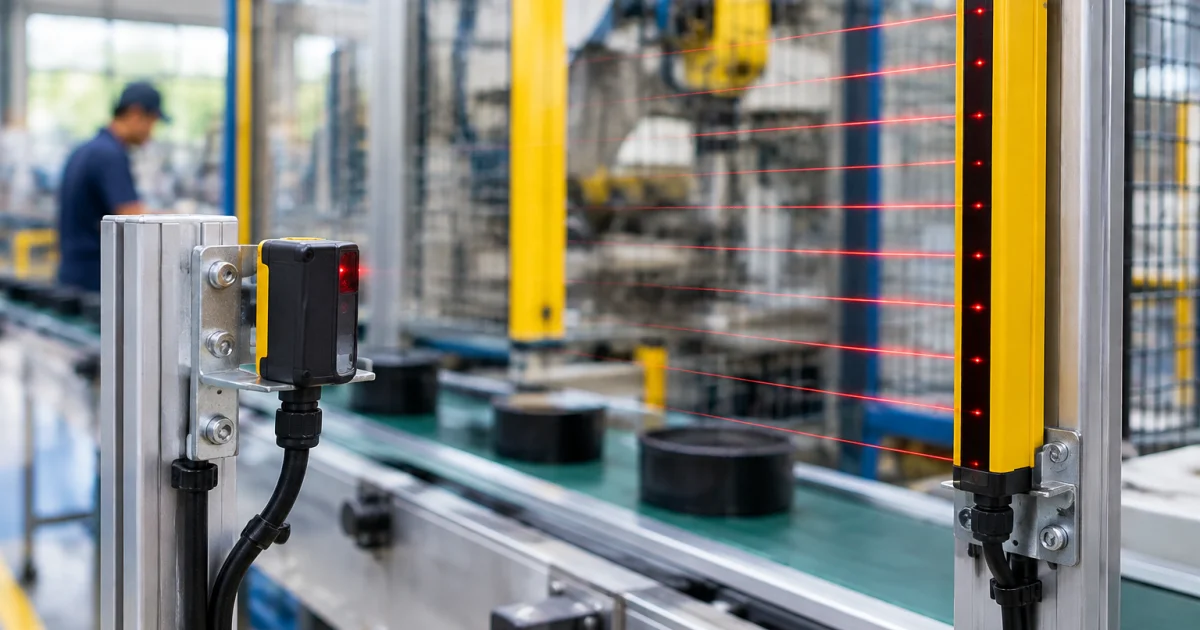
Controls that keep vacuum reliable include vacuum switches (pick confirmation), correct filtration, cup material selection, and short protected vacuum lines. In high-mix, treat cups as consumables and standardise spares and maintenance intervals.
Custom end-effectors: when you need one tool to do more than “grip”
In high-mix automation, “custom end-effector” often means integrating functions beyond gripping: alignment, compliance, sensing, verification, or process tooling. Custom does not have to mean complicated—it means designed around your part families and quality requirements.
When a custom end-effector is justified
- Complex geometries: undercuts, holes, fragile features, or form-fit support needs.
- Universal tooling across SKUs: one base with modular fingers, adjustable stops, or reconfigurable vacuum zones.
- Process operations at the wrist: screwdriving, dispensing, polishing, deburring, labeling, probing.
- Strict quality constraints: preventing rotation, controlling seating force, guaranteeing orientation at handoff.
Design patterns that work well for high-mix
- Hybrid electric + vacuum: vacuum for pickup, fingers to stabilise for transport or insertion.
- Passive compliance: spring elements, flexures, or remote center compliance to absorb misalignment.
- Datum-based support: locate against a repeatable datum on the tool, not just squeezing.
- Quick-change interfaces: standard mechanical/electrical interface to swap tools safely with minimal re-teach.
Custom tooling is most valuable when you need consistent results across operators and shifts. Adding sensors (force/torque, proximity, vacuum pressure) can reduce trial-and-error tuning and improve fault diagnosis.
Selection checklist: choose by part families, changeovers, and sensing
Most teams face a practical choice: standardise one “universal” tool, or run multiple tools with managed changeovers. Use the checklist below to keep the decision grounded in production reality.
1) Part family fit
- Electric: best for rigid parts with accessible grasp points and manageable variation.
- Vacuum: best for flat/semi-flat top picks; be cautious with porous, dusty, or oily surfaces.
- Custom: best when you need defined locating, anti-rotation, compliance, or multi-function support.
2) Changeover strategy (mechanical + software)
Treat changeover as a core cell feature. Decide early:
- Swap fingers (often fastest/lowest cost) or swap the full tool (cleaner standardisation)?
- Recipe selection via barcode/QR, MES signal, or operator HMI?
- Poka-yoke needed (tool ID, presence sensing) to prevent wrong-tool runs?
For many high-mix lines, a modular base plus a small library of end-effectors—paired with a quick changer and a standard commissioning checklist—balances flexibility and control.
3) Pick confirmation and quality assurance
In high-mix, “it usually works” isn’t acceptable. Build confirmation into the process:
- Electric grippers: position/force thresholds for missing part or mis-grip detection.
- Vacuum tooling: vacuum switches or flow sensing to confirm seal before motion.
- Vision checks: verify presence, orientation, and correct SKU before insertion or packing.
If you already plan to deploy vision inspection machines or a robotic vision inspection system, you can often simplify the end-effector: let vision handle orientation/presentation variability while the gripper focuses on reliable contact and safe handling.
4) Integration and maintainability
Grippers are maintenance items. In Malaysia’s high-throughput electronics and general manufacturing environments, prioritise components technicians can support:
- Accessible wear parts (cups, pads, fingers) with standard spare kits
- Documented parameter sets per part family
- Protected routing for air tubes and cables
- Clear fault signals maintenance can interpret quickly
Align the gripper choice with the broader automation architecture—robot, safety, controls, sensors, and inspection—so the cell remains serviceable long after commissioning.
Practical examples by industry: what “good selection” looks like
These common patterns show how engineers combine end-effector choice, fixturing, and sensing for high-mix reliability.
Electronics and PCB handling
- Typical challenges: ESD sensitivity, small components, cosmetic constraints, varied tray formats.
- Common solution: electric gripper with ESD-safe fingers for housings; vacuum for flat trays and sealed packs; add vision to correct orientation before insertion.
- Related process: when feeding a robotic soldering machine or supporting auto soldering, stable part location is critical; simple locating features on the tool can reduce solder defects from misalignment.
Food & beverage packaging
- Typical challenges: flexible packaging, condensation, varying pack thickness, hygiene constraints.
- Common solution: vacuum tooling with suitable cup materials and confirmation sensing; foam pads for multi-pick; validate cleanability and changeover steps.
Precision engineering and machining support
- Typical challenges: oily parts, sharp edges, tight insertion tolerances, burrs.
- Common solution: electric gripper with robust, anti-slip fingers; add passive compliance for loading/unloading; use custom tooling when consistent datum seating is required.
Warehouse kitting and internal logistics handoff
If parts arrive via an AMR machine or kitting trolley, presentation often varies. In these cases, simple tooling plus vision-based pick correction is usually more scalable than repeatedly redesigning mechanical jaws.
How Chin Tech approaches high-mix end-effector selection
High-mix success comes from reducing unknowns early. Chin Tech typically treats gripper selection as part of total cell design: robot choice, end-effector concept, quick-change strategy, sensing, and inspection. A robust solution may pair a cobot with modular end-effectors, force/torque sensing for insertion tasks, and vision checks to reduce manual verification.
If you are standardising on a collaborative platform, you can explore options such as Chin Tech Collaborative Robot or TM collaborative robot models, then match payload/reach to your application constraints. Tooling references include the OnRobot RG6 collaborative gripper and OnRobot VG10 vacuum gripper.
Conclusion: pick the simplest tool that stays stable across changeovers
For high-mix production, the best end-effector strategy is the one that stays reliable as the mix changes, operators change, and upstream variability appears. Electric grippers deliver controllable force and repeatability for many rigid parts. Vacuum tooling delivers speed and forgiveness when surfaces seal well. Custom end-effectors justify their cost when you need locating, compliance, multi-function tooling, or modularity that reduces total changeover time.
Decide by part families and confirmation strategy. If you can’t reliably confirm pick and orientation, you don’t have a high-mix solution yet—you have a demo. Build confirmation into the process, standardise changeovers, and your cobot cell will scale to real factory variety.
Frequently Asked Questions
How do I choose between an electric gripper and a vacuum gripper for high-mix parts?
Start with part surface and grasp access. Electric grippers suit rigid parts with consistent edges or features and benefit from controllable force/position feedback. Vacuum grippers are faster for top picks and flat, non-porous surfaces (pouches, lids, cartons) but struggle with porous, dusty, or oily surfaces unless you design for filtration, cup material, and vacuum confirmation.
What sensors should I add to reduce pick failures during frequent changeovers?
Use a confirmation method that matches your end-effector: vacuum pressure/flow switches for vacuum tooling, and position/force thresholds for electric grippers. For high-mix orientation and SKU variation, add machine vision to verify presence and orientation before insertion or packing, especially when part presentation varies.
When is a custom end-effector worth the cost in collaborative robot projects?
Custom tooling is justified when you need datum locating, anti-rotation, compliance for insertions, or a single modular tool to cover multiple SKU families reliably. It’s also worth it when the tool must do more than gripping—such as stabilising parts for soldering, integrating probing, or combining vacuum pick with mechanical stabilisation.
How can we make cobot gripper changeovers faster and less error-prone?
Standardise the interface (quick changer or a repeatable mounting plate), limit the number of tool variants to part families, and create clear recipes with verification steps (tool ID, pick confirmation, and a short test cycle). Store spare wear parts (cups, pads, fingers) in a labelled kit so maintenance can restore performance quickly.
Do you provide robot integration services for ASEAN manufacturers with high-mix production?
Yes. Chin Tech supports manufacturers in Malaysia and the wider region with automation system integration, including cobots, end-effectors, machine vision and inspection, and material-handling automation. For high-mix projects, the focus is usually on modular tooling, reliable sensing/inspection, and a changeover workflow that production teams can run consistently.
Design a high-mix end-effector strategy with Chin Tech
If you’re balancing dozens of SKUs, short changeovers, and strict quality requirements, Chin Tech can help you select and integrate the right gripper concept—electric, vacuum, or custom modular end-effectors—along with quick changers, sensors, and vision/inspection where needed. With 21+ years of automation experience and 800+ systems deployed, our team delivers end-to-end integration from concept and tooling design to programming, testing, and commissioning across Malaysia.